
Start from one sentence
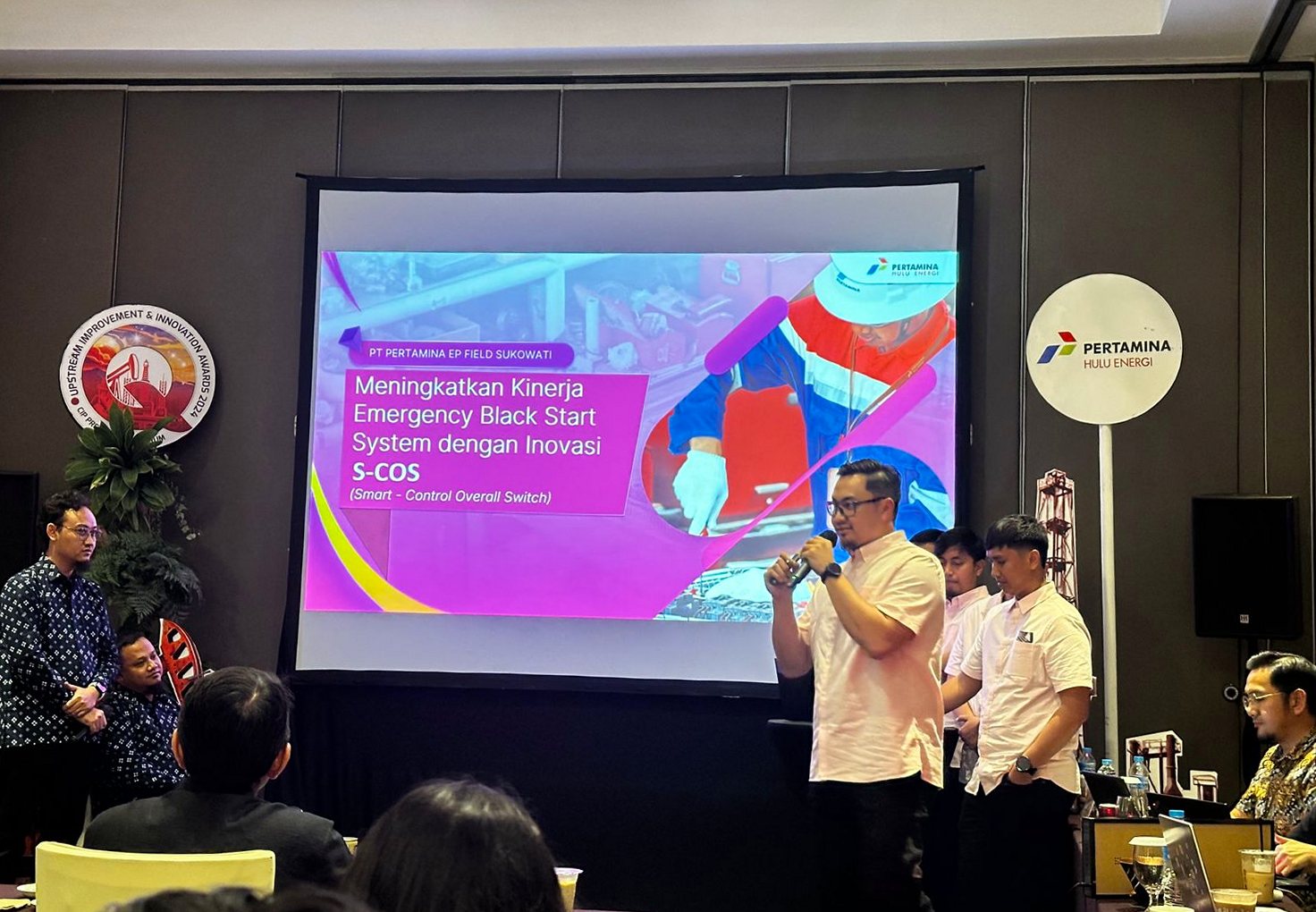
Before you open PowerPoint, write your team’s innovation in one sentence: which problem it solves, how, and with what result. For PC Prove 05, the sentence was roughly this: S-COS is a smart switch that brings a power plant back from a blackout in under ten minutes.
That sentence becomes the test for every slide that follows. If a slide does not help the panel understand it, the slide probably belongs in the appendix.
Follow the order the panel knows
In one forum, a CIP panel assesses many teams. They are used to improvement steps told in order, so the presentation should follow the same steps as your team’s documentation. In the PC Prove 05 deck, the order was:
- The problem and its impact: the blackout and what it meant for operations.
- Root cause analysis with a fishbone diagram.
- The choice of solution, including why the alternatives were set aside.
- The results, presented for each QCDHM aspect.
- Standardisation, so the improvement keeps running after the forum.
With a consistent order, the panel never has to guess where they are, and their attention stays on the innovation.
One slide, one job
The drafts we receive often put everything on one slide: a table, photos, a chart and a long paragraph. On a big screen, that slide is hard to read from the panel’s seats. What we usually do:
- Write the title as a sentence. For example “Recovery time fell after S-COS was installed”, so the message reads from the title alone.
- Make the key number big. The full table stays in the appendix for questions.
- Redraw the diagrams. Fishbone and process diagrams are rebuilt cleanly. A screenshot from a document is usually too small for a stage screen.
- Use field photos as evidence. A photo of your team installing the equipment persuades far more than a stock photo.
A simple test: put the slide on a screen, step back to where the panel sits, and see whether the main message reads at once.
A visual theme with a reason
A theme helps the panel remember your team among many others. Strong themes usually start from something that belongs to the team or the event.
For CIP 2024, we took pink and violet from the event’s own visual identity and set an oil rig, wind turbines and solar panels on one horizon as the backdrop for S-COS. A year later, the same innovation went to APQ 2025 with a new theme: a golden wayang on black batik, beside photographs of the team in the field. The story is in the PC Prove 05 at APQ 2025 case study.
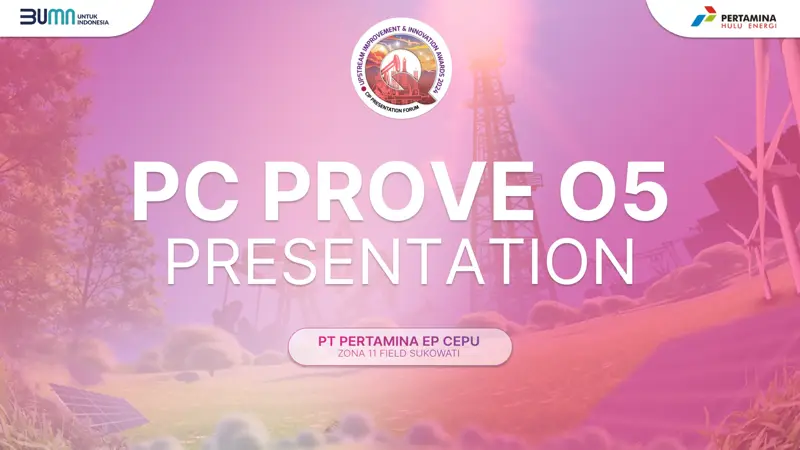 Case study · CIP 2024PC Prove 05, Platinum at CIP 2024A deck for the S-COS innovation, a smart switch that brings a power plant back from a blackout in under ten minutes.Read the Case Study
Whatever the theme, carry it from the cover to the closing slide so the deck reads as one piece.
Design for the stage screen
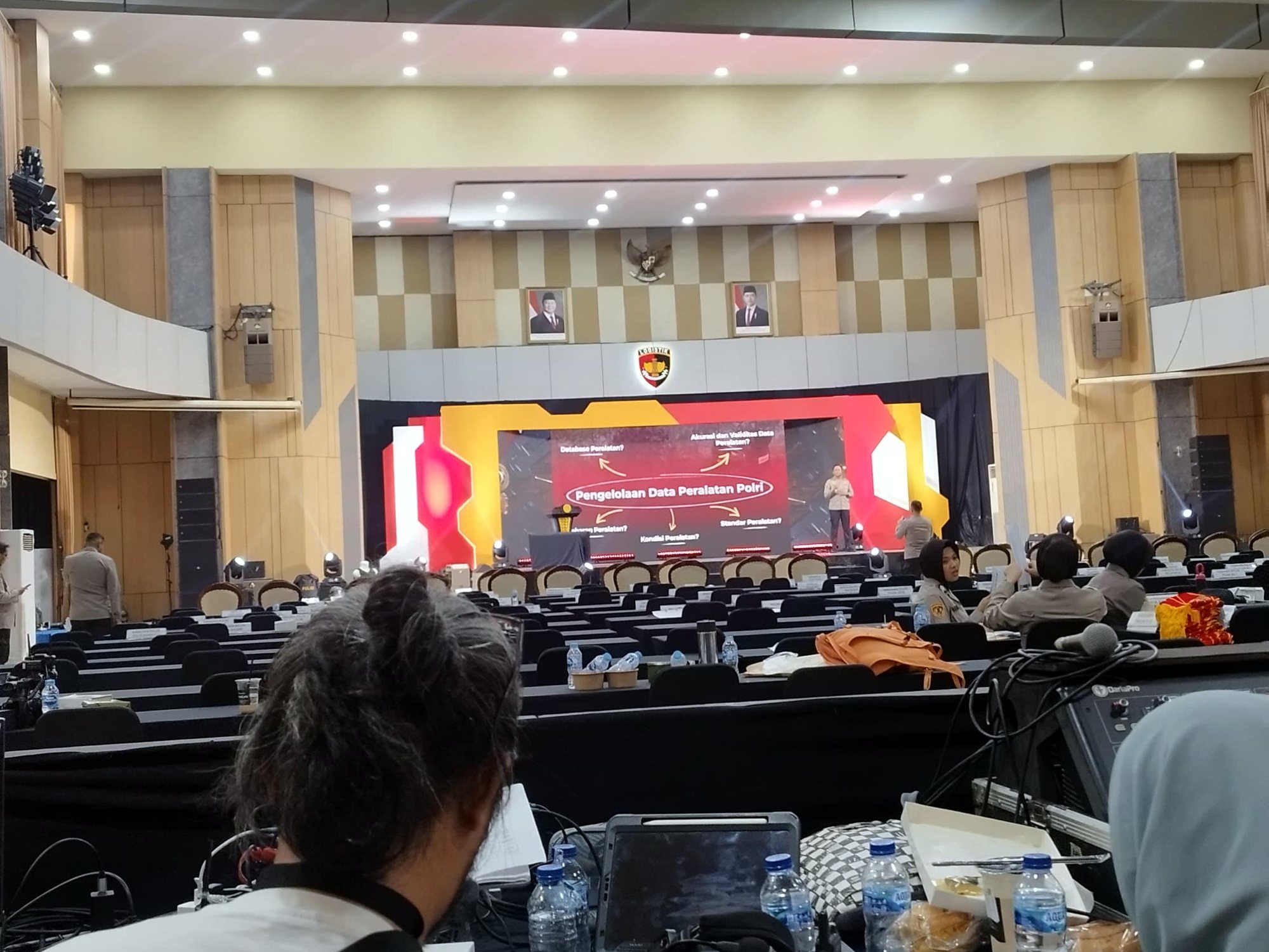
CIP presentations are judged in rooms with a large screen, stage lights and a long reading distance. Type size, colour contrast and the amount of text per slide matter more there than on a laptop.
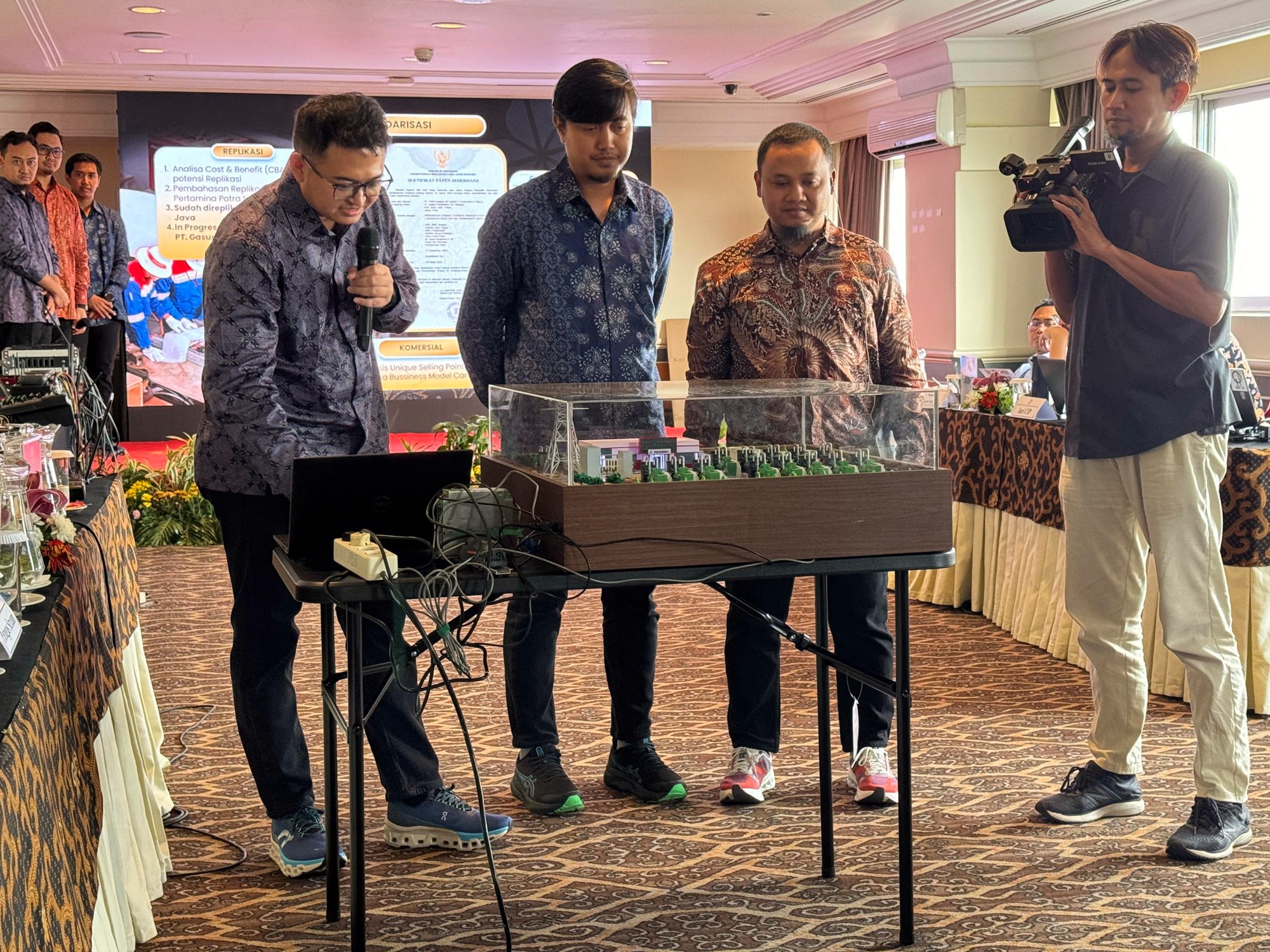
Supporting material can help too. The PC Prove 05 team played a team introduction video before their CIP 2024 presentation, then brought an S-COS scale model to demonstrate to the APQ 2025 panel. Material like this lets the panel see the innovation working, and it works best in the same theme as the deck.
Leave time for revision and rehearsal
A good deck is rarely finished in one round. In our team, a deck usually takes about four weeks: the first week for the initial discussion, the storyline and the theme, then weeks two to four for design and revision with your team. If your presentation date is closer, mention it at the start and we will plan the timeline around it.
Leave time to rehearse with the final deck as well. A presenter who knows the slide order speaks more calmly, and the panel notices.
Summary
- Write the innovation in one sentence, then test every slide against it.
- Follow the improvement steps the panel knows.
- One slide, one message, with a sentence as the title.
- Choose a theme with a reason, and carry it to the end.
- Design for the stage screen, and leave time to rehearse.
If your team is preparing a CIP presentation, send us what you have, with the event name and your presentation date. We will work out the storyline together in the initial discussion. How we work with innovation teams is on our CIP presentation design page.